
Deepfakes: the real harm, and the point they cross into a crime
Short answer: harmful, and often illegal
Yes. Deepfakes cause real harm, and many of them are already against the law. The picture people imagine, a playful face swap for laughs, is not what fills the deepfake internet. Per humanrightscentre.org, 98% of deepfake videos online are sexually explicit, and 99% of the people in them are women whose images were used without consent.
In the United States a non-consensual sexual deepfake is now a federal felony, after the TAKE IT DOWN Act became law in May 2025 (criminaldefenselawyer.com). So the answer to 'is this legal?' is rarely about the technology. It turns on three things: did the depicted person consent, did the maker intend harm, and what does the clip actually show. A sexual or election fake of a real person sits in very different legal territory than a labeled cartoon.
The four real harms of deepfakes
Start with the damage, because the law mostly follows it. Four harms come up again and again, and they are not abstract.
First, image-based sexual abuse. This is the bulk of the problem, the 98% figure above, and it lands almost entirely on women and girls. Researchers describe the psychological injury to victims as comparable to that of sexual abuse, even though no physical contact ever happened. The body in the video is fabricated. The fear, shame, and loss of control are not.
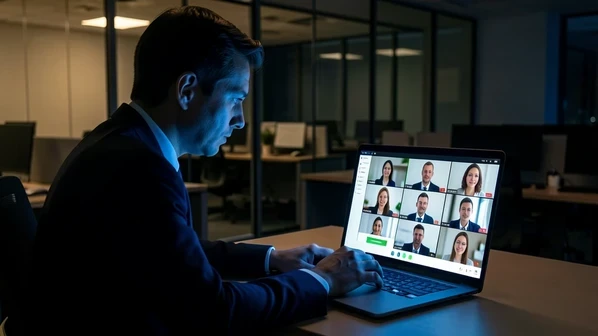
Second, money. A finance worker was tricked into wiring $25 million after joining a video call where every other participant was a deepfake of a real colleague (yoti.com). Voice cloning does the same trick at smaller scale: a familiar voice on the phone asking for an urgent transfer. Ondato.com reports deepfake incidents surged 257% in 2024, and Deloitte projects US generative-AI fraud reaching $40 billion by 2027.
Third, disinformation and elections. Fabricated clips of candidates, and AI-cloned voices in robocalls, can move opinion before anyone checks. The harm is not only the lie. It is the speed at which it spreads versus the slowness of the correction.
Fourth, and most corrosive, the liar's dividend. Once everyone knows video can be faked, a guilty person can wave away genuine footage as 'just a deepfake' (brookings.edu). The first three harms hurt individuals. This one chips at something shared: our ability to trust real evidence at all.
Why 'just for fun' is still illegal
This is the rationalization that gets people in trouble. A fake made for a laugh feels harmless to the person making it. The law does not grade on intent to amuse. Per unr.edu, a photo or video made 'for fun' is still illegal when it was created without the depicted person's knowledge or permission.
Picture a teenager who face-swaps a classmate into something explicit and drops it in a group chat as a joke. No money changes hands. No grand plan. It can still be a crime, and the 'I was only kidding' line is not a defense, it is a confession to having done it.
There is a subtler trap too. Consenting to the creation of an AI image of yourself does not mean consenting to it being posted online (aap.org). Those are two separate acts of permission. Someone might agree to a playful edit in private and never agree to see it shared, and 'but they said yes to the picture' does not cover the publishing. Under TAKE IT DOWN, even threatening to publish such intimate imagery can be unlawful, not just the posting itself.
Saying yes to the creation of an AI image of yourself is not the same as saying yes to it being posted. The second permission has to be given separately. (aap.org)
What the law actually says (US federal and states)
The headline change is the TAKE IT DOWN Act, signed in May 2025, which makes non-consensual publication of authentic or deepfake sexual images a federal felony (criminaldefenselawyer.com). It also puts a clock on platforms: flagged non-consensual intimate imagery must come down within 48 hours of a victim's notice, with one year to stand up the removal process (aap.org). That takedown duty is a separate lever from prosecution, and it often helps a victim faster than a courtroom ever could.
Federal law calls these clips 'digital forgeries' of identifiable adults or minors. For adult-victim cases, prosecutors have to show the defendant intended or caused financial, psychological, or reputational harm, which is a real bar to clear. Below the federal layer sits a patchwork. Nearly every state now bans deepfake pornography, many by extending their existing revenge-porn statutes, and penalties run the full range from misdemeanors to felonies carrying years in prison.
Non-sexual fakes lean on the legal hook that fits the harm. The mapping below is the heart of the matter: each kind of damage already has a law reaching for it, even where no deepfake-specific statute exists yet.
| Harm | Legal hook that addresses it |
|---|---|
| Non-consensual sexual imagery (NCII) | TAKE IT DOWN Act (federal felony) plus state revenge-porn laws |
| Voice or video impersonation scams | FCC ruling making AI voices in robocalls illegal (Feb 2024); fraud statutes |
| Election manipulation | State election-deepfake laws, with Texas first in 2019 |
| Reputational and defamatory fakes | Defamation, false light, right of publicity, copyright, IIED |
Two points readers often miss. Texas became the first state to ban election-targeted deepfakes back in 2019 (ondato.com), and the FCC ruled in February 2024 that AI-generated voices in robocalls are flatly illegal (nysba.org). What does not exist is a single comprehensive federal AI law that ties all of this together. It is a patchwork, which is exactly why the same fake can be charged differently depending on where you stand.
Where the line is: parody, satire, and free speech
A fair question shows up under nearly every video on this subject: if a cartoon can mock anyone, why is a deepfake different? Satire and parody really are protected expression, and regulators have to weigh any ban against the First Amendment. So the line is not 'fake equals illegal'. The line is consent and harm.
A clearly labeled political send-up that no reasonable viewer mistakes for reality sits on the protected side. A non-consensual sexual fake of a real person, or a clip built to defraud, does not, because that conduct is not speech the First Amendment shields. Where a statute does not cleanly apply, victims still reach for older theories: defamation, false light, right of publicity, copyright, and intentional infliction of emotional distress (brookings.edu). The drawing comparison breaks down precisely because the harm and the missing consent are real, not the cartoonishness.
'But they can't catch me': why enforcement is hard
Plenty of readers quietly assume creators are untouchable, and the assumption is not baseless. It is also not a legal loophole. The act stays illegal even when the person behind it is hard to find.
- Detection is an arms race, and the methods that spot fakes keep lagging the best tools that make them, so a 'we'll just detect it' plan never fully holds (brookings.edu).
- Cross-border cases stall when the maker sits in one country and the victim in another, and authorities often cannot reach across that gap (ondato.com).
- Many statutes demand proof of malicious intent, which is genuinely hard to pin on a careless or joking creator.
And the barrier to making one keeps dropping. A 60-second deepfake can be produced in under 25 minutes from a single clear photo of someone's face (humanrightscentre.org). That is why incidents are climbing faster than courts can move. Hard to catch is a practical problem for victims, not permission for creators.
How the rest of the world is responding
The direction of travel is toward stricter rules, though coverage is uneven. South Korea passed a 2024 law that bans not just making and sharing sexual digital forgeries but possessing and even viewing them (humanrightscentre.org). That reaches further than most US statutes.
The EU took a different tack. Its Digital Services Act and AI Act push providers to label AI-generated content, yet neither explicitly addresses deepfake pornography, leaving that harm to other laws. And the global floor is low: an ICMEC review found that of 196 countries, only 27 meet all five legislative criteria for child sexual abuse material, with 10 having no relevant legislation at all (aap.org). The patchwork is not just American. It is planetary.