
HeyGen or Synthesia? Match the tool to your use case before you pay
Pick HeyGen if you make marketing clips, social and YouTube content, or sales outreach and want the most realistic, expressive avatars. Pick Synthesia if you build corporate training, onboarding, and e-learning at scale and need structured, compliant videos. Both turn a text script into a presenter-led avatar video with no camera, studio, or actor. The decision rarely comes down to the headline monthly price. It comes down to pricing model and the 12-month total cost of ownership, where a 25-person training team can pay anywhere from $7,500 to over $25,000 a year (Colossyan).
One sentence for each reader. A solo creator chasing realism and fast multilingual output leans HeyGen. An L&D owner who needs consistent modules across a large team leans Synthesia.
Avatar realism and naturalness
HeyGen wins on raw realism. Its Avatar IV models, launched in August 2025, render ultra-realistic avatars with micro-expressions and natural gestures, and the lip-sync holds up under scrutiny (vidmetoo). That is the quality marketers judge a tool on in a six-second hook.
Synthesia is not far behind, but it optimizes for something different. Its 240+ Express-2 avatars carry micro-expressions on paid plans and are tuned for consistency, so the same presenter looks identical in scene 3 and scene 30 of a long module. For a 15-minute compliance course, that steadiness matters more than a single jaw-dropping frame. Short marketing clip versus long training module is the real fault line here: HeyGen for the standout shot, Synthesia for the unbroken thread.

Pricing models: credits vs minutes, and the real 12-month cost
This is where the two tools actually diverge. HeyGen runs on a credit-based model: you spend credits per generation. Synthesia runs on a minute-capped subscription: each tier buys you a yearly pool of video minutes. The structure decides who overpays. Heavy, bursty creators drain HeyGen credits fast; steady high-volume teams hit Synthesia minute ceilings.
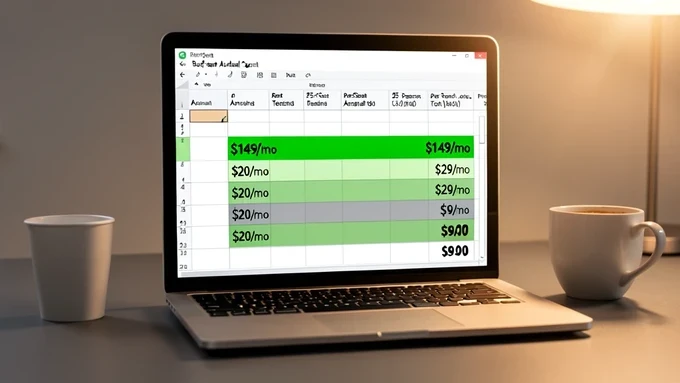
Look at the numbers before the team grows. HeyGen Creator is $29/month month-to-month, or $24/month billed annually (Colossyan). HeyGen Business is $149/month for the primary seat, then $20/month for every additional member (Colossyan). On Synthesia, Starter is $18/month and Creator is $64/month, both billed yearly (G2), giving 120 and 360 minutes of video per year respectively (Synthesia). Avatar IV, HeyGen's most realistic option, costs 20 Premium Credits per minute, and unused HeyGen credits do not roll over (vidmetoo). So a few long Avatar IV videos can eat a month's allowance with nothing banked for next month.
A 25-person training team will pay anywhere from $7,500 to over $25,000 per year (Colossyan). Same headcount, very different bill, depending on which model fits the workflow.
Picture that 25-person team on HeyGen Business. The primary seat is $149/month, the other 24 seats add $20/month each, so $480/month in add-ons. That is roughly $629/month, or about $7,548 a year in seats alone, before any Avatar IV credit burn pushes it higher. Stack heavy realistic output on top and you climb toward the upper end of that range fast.
Free tiers and trial reality
HeyGen has a genuine free tier. You get 3 videos per month, exports up to 720p, and 1 custom video avatar (Colossyan). Enough to test the editor and judge avatar quality on your own script.
Synthesia is stingier here. Its free or basic tier sits at $0/month but caps you at about 10 minutes of video per month with 9 avatars (Colossyan). Call it what it is: a limited free tier, not a true free plan. For a quick proof of concept it works. For ongoing unpaid use, it runs out almost immediately.
Hidden costs and tier-jump surprises
The sticker price is not the bill. On HeyGen, collaboration is the trap. Team features live on the Business plan, so the moment a second person needs in, you leap from Creator at $29/month to Business at $149/month (Colossyan). That is a fivefold jump triggered by a single shared seat, not by output volume.
Synthesia hides cost elsewhere. A custom studio avatar carries an extra fee of roughly $1,000 per year per personalized avatar through the Studio Express add-on (vidmetoo, fahimai). Self-service voice cloning and voiceover upload are gated to Enterprise. And because enterprise pricing scales per seat, every new hire adds a linear chunk to real spend rather than amortizing across the team.
- HeyGen: a second collaborator forces the $29 to $149 Business jump.
- Synthesia studio avatars add about $1,000/year each.
- Voice cloning on Synthesia is Enterprise-only.
- Per-seat enterprise pricing grows linearly with headcount, so a growing team feels it every quarter.
Language support and translation
HeyGen edges this. It covers 175+ languages with video translation and lip-sync on paid plans, against Synthesia's roughly 160+ languages, dialects, and tones with 1-click translation (Colossyan). Both handle voice cloning and multilingual translation, so the gap is reach, not capability. If you publish the same clip across a dozen markets weekly, HeyGen's slightly wider list and accessible translation give it a practical nudge.
Editing workflow: flexible creator editor vs slide-deck structure
Synthesia thinks in slides. Its scene-based editor works like PowerPoint, with SCORM export and version control built in, which is exactly what an L&D team wants for trackable, updatable courses. HeyGen thinks in canvases. Its creator-focused editor is looser and ships with 300+ templates, better suited to one-off promos and social cuts.
There is a shared catch worth knowing before you commit a long script. On both platforms, a script change can force a re-render of the whole video rather than just the edited scene. No surgical fix to one sentence. For a 12-minute module, a single typo correction can mean regenerating the entire thing, which is why teams that revise often feel the minute and credit drain twice.
Special features that only one tool has
Each platform owns a few tricks the other cannot match. HeyGen offers real-time and live avatars through its API, plus TalkingPhoto talking-photo avatars and face swap, and its Digital Twin builds a custom avatar from about 2 minutes of footage (vidmetoo). That API angle unlocks personalized video at scale: pipe CRM data into a template and send each prospect a sales clip that greets them by name and references their account.
Synthesia's standout is the AI Playground, which brings Veo 3.1 and Sora 2 generation for b-roll to every plan, including free, at 48 credits per clip (vidmetoo). Generated supporting footage inside a training tool, without a separate video model subscription, is genuinely rare in 2026.
Enterprise security and compliance, including the HIPAA gap
Regulated buyers should read this section first. Synthesia is fully SOC 2 Type II, GDPR, and ISO 42001 compliant and is trusted by over 90% of the Fortune 100 (Synthesia). It also enforces explicit human consent for avatar creation with strict content moderation. HeyGen is described as SOC 2 Type II ready, while Synthesia is SOC 2 Type II certified (wavespeed).
Now the gap nobody advertises. Neither platform has published HIPAA compliance documentation as of March 2026, despite rising demand from healthcare and financial-services buyers (Colossyan). If your use case touches protected health information, treat that as a hard blocker and confirm a signed BAA in writing before any rollout. Run a short checklist against each vendor: SOC 2 Type II, ISO 42001, GDPR posture, consent controls, and HIPAA status. Today only Synthesia clears the first three cleanly, and HIPAA is open on both sides.
Which should you choose? Use-case decision guide
Map it to what you actually ship. HeyGen is the better fit for marketing, social and YouTube content, sales outreach, and fast multilingual creation, where realism and speed win attention. Synthesia is the better fit for corporate training, onboarding, e-learning, and internal communications, where structure, SCORM tracking, and compliance keep a program running.
Team size flips the calculus. Below ten users, either tool stays manageable and the choice is about output style. Past ten, two things bite: collaboration needs and per-seat cost. HeyGen pushes you onto the $149 Business plan and stacks $20/seat on top, while Synthesia's per-seat enterprise pricing climbs in a straight line. Model the 12-month bill at your real headcount, not at one seat.
As a final trust check, reader ratings are close and high on both. Synthesia holds about 4.7 out of 5 across roughly 2,376 reviews, and HeyGen takes a slight lead at 4.8 out of 5 from about 1,194 reviews (G2). Neither score lets you skip your own test on your own script.
| Criterion | HeyGen | Synthesia | Edge |
|---|---|---|---|
| Avatar realism | Avatar IV, micro-expressions, strong lip-sync | Express-2, tuned for consistency | HeyGen |
| Entry pricing | Creator $29/mo ($24 annual) | Starter $18/mo billed yearly | Synthesia |
| Free access | 3 videos/mo, 720p, 1 avatar | ~10 min/mo, 9 avatars, no true free plan | HeyGen |
| Languages | 175+ with translation and lip-sync | ~160+ with 1-click translation | HeyGen |
| Editing | Flexible creator canvas, 300+ templates | Slide-deck editor, SCORM, version control | Synthesia |
| Compliance | SOC 2 Type II ready | SOC 2 Type II, GDPR, ISO 42001 | Synthesia |
| Unique feature | Real-time avatars, talking photos, face swap | AI Playground (Veo 3.1 / Sora 2) on all plans | Depends |
Want the full cost-model breakdown behind these figures? The per-seat math and the $7,500 to $25,000 range are laid out in the Colossyan comparison.