
Is PiktID worth your credits? A buyer's review for commercial face swaps
Short answer: PiktID earns its price if you are a photographer, marketer, or developer who needs imagery you can sell without chasing model releases. It swaps real people for synthetic faces, so the scene survives and the identity does not. Paid credits carry a commercial-use license, credits stay valid for two years, and an open-source library called SwapID covers the technical route. The weak spots are honesty gaps: PiktID never states how long it keeps your uploads, and video support is unconfirmed. If those matter to you, read on before you pay.
What PiktID is and who it's for
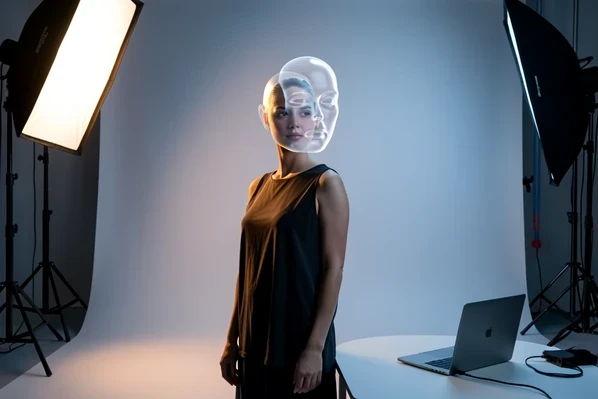
PiktID is a face replacement tool built around de-identification. Instead of pasting a celebrity onto a friend's body for laughs, it removes the identities of the real people in a photo and drops in synthetic faces that never existed. The composition, the lighting, the wardrobe all stay. Only the people change. PetaPixel framed this exact use case when it first covered the tool: keep the human presence, lose the legal exposure.
That reframing decides who should care. Commercial and advertising photographers who shoot stock or campaign imagery. Marketing teams retargeting the same creative to different audiences. Developers who want swapping inside their own product. You reach the technology through three doors: the web studio at studio.piktid.com, an API, and the open-source SwapID Python library. Each door fits a different buyer, and the rest of this review keeps mapping features back to them.
Features that set PiktID apart
The headline feature is identity generation. PiktID creates faces that belong to no living person, and you steer them: expression, ethnicity, age. For an ad team that needs the same shot to read as a 25-year-old in one market and a 50-year-old in another, that control is the whole point. Face editing rounds it out with quicker retouching and expression tweaks, though that part feels average next to the generation engine.
Credits are pooled, not siloed. One balance powers the entire suite: EraseID for removals, SuperID, TagID, and SwapID for swapping. You are not buying separate quotas per tool. The piece no consumer rival offers is SwapID's granularity, exposed as command-line arguments:
- Head swap moves the whole head, not just the face plane.
- Hair transfer pulls the source hairstyle across when strength climbs above 0.5.
- The
--skinflag adjusts body skin so the swapped face matches the surrounding tone. - On a photo with several people,
idx_facepicks exactly which subject gets swapped.
An API sits alongside the studio for teams who want swapping embedded in their own workflow. It is a solid bridge rather than a showcase feature, but its presence is what separates PiktID from tools that stop at a web upload box.
Pricing and how credits really work
Every face generation costs one credit. That single rule makes the economics easy to model, which is rarer than it sounds. Subscriptions open at €19 per month, and PetaPixel pegged that entry tier at €0.63 per credit for 40 credits. Push to a larger plan and the rate falls to €0.39 per credit. Yearly billing knocks a further 10% off.
Two policies change the math in your favour. Monthly plans start at 30 images and let unused credits roll forward, up to roughly four to five times your monthly budget. And per PiktID's own pricing page, credits stay usable for two years from purchase. Many rivals wipe unused credits at the end of each billing cycle. Here, a slow month is not a loss.
Run the numbers on a real shoot. A 40-credit, €19 plan covers 40 generations. A campaign needing four synthetic faces across ten hero frames spends every credit and lands at about 48 cents each on the entry tier, or 39 cents apiece once you scale up. Against a per-swap consumer tool like DeepSwap, where the cost sits inside a flat subscription and idle credits often expire monthly, PiktID's two-year window means you pay for output you actually keep.
| Plan | Per-credit cost | What stands out |
|---|---|---|
| Subscription (entry, 40 credits) | €0.63 | From €19/month, 30+ images, credits roll over |
| Subscription (larger plans) | €0.39 | Lowest rate, same two-year validity |
| Pay-as-you-go bundle | Higher than subscription | For one-off or unpredictable needs |
| Enterprise | Custom | High-priority support, unlimited credits |
Pay-as-you-go bundles exist for irregular work, but you pay a premium per credit for the flexibility. Enterprise is quoted ad hoc. The tip worth keeping: if your usage is steady, a subscription plus the yearly discount beats bundles on cost, and rollover absorbs the uneven months.
Free trial: what you actually get
New users get 10 free credits, confirmed on both the SwapID GitHub repo and PiktID's pricing page. Enough to test the swap on your own source photos before any card details. But set expectations. PetaPixel described the free-tier output bluntly as low quality, and the images arrive watermarked and at low resolution.
There is a second catch that matters more than the watermark. Anything you make with free credits is licensed for personal use only. Treat the trial as a proof of concept for whether the algorithm handles your subjects, not as a way to squeeze out a few free commercial assets. That door is shut by the license, not the resolution.
Commercial use and licensing clarity
This is the question that sends most photographers to the pricing page, so here it is without hedging. The commercial license hinges on the credit type, not the plan name. Images made with paid credits, whether from a subscription or a pay-as-you-go bundle, can be used commercially. Images made with free credits cannot. PiktID states this directly on its pricing page.
The practical payoff connects back to de-identification. Because you are replacing real faces with people who do not exist, the resulting image carries no model release obligation and no individual privacy claim, as PetaPixel noted. So a paid-credit headshot composite can run in a paid ad campaign. The same composite made on a trial credit is flagged personal-use-only, even though it looks identical. Spend a paid credit before you publish, every time.
Quality limits and what trips the algorithm
PiktID is upfront about its sweet spot. The swap works best when the subject faces the camera, and it tolerates only a limited amount of facial rotation. Push past a mild three-quarter angle and quality slides. Two physical obstructions break it further: hands or hair drifting in front of the face confuse the algorithm, because it loses the clean facial plane it needs to anchor the new identity.
Picture a hard case. A candid frame where the subject laughs with a hand half over the mouth, head turned 40 degrees. That is the shot PiktID will struggle with, and knowing it lets you brief your photographer to shoot swap-friendly angles up front. One honest caveat: no independent, hands-on benchmark of PiktID's own swap realism exists in the public record. I can report the documented limits, but nobody has published a controlled accuracy test, so realism on borderline shots remains an open gap.
Developer and API path: SwapID open source
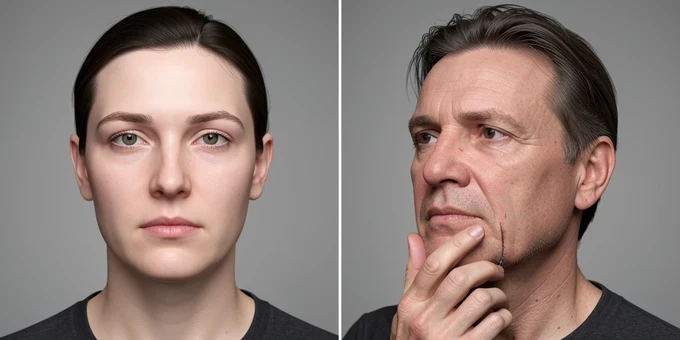
SwapID is the route no consumer swapper can match. It is an open-source Python library that mirrors the swap running at studio.piktid.com, so a developer can reproduce the studio result in code. The same granular controls surface as command-line flags, which makes batch and pipeline work straightforward.
A quick walkthrough shows the shape of it. You point the tool at a source and target, then layer flags: a head-swap argument for full-head replacement, a hair-transfer setting above 0.5 strength to carry the source hairstyle, and idx_face to name which subject in a group shot receives the swap. For teams shipping a product, the hosted API does the same job without managing the library yourself. Developers get embeddable swapping; photographers get the studio. The credit pool is shared across both.
Privacy and data handling: what's documented and what isn't
Here PiktID asks for more trust than it earns on paper. The tool is positioned, in BitDegree's roundup, as a way to hide identities in images, which is a privacy-positive pitch. The irony is that PiktID's own privacy posture is thin where it counts.
On the pages reviewed, three things are simply not stated: how long PiktID retains your uploaded faces, how you delete them, and whether your images feed model training. Those silences are the honest gap, and I will not paper over them. What the site does disclose is a cookie and consent banner covering profiling and cross-site tracking for marketing. If you are handling sensitive source material, get a retention and deletion answer in writing from PiktID before you upload it.
Verdict: who should buy PiktID and who shouldn't
Buy PiktID if you are a photographer or marketing team that needs model-release-free commercial imagery, or a developer who wants an API or an open-source swap path. Three factors carry the recommendation: credits valid for two years, rollover that forgives quiet months, and SwapID's open-source flags that no consumer tool exposes. The credit-per-generation model is honest and easy to budget against.
Skip it, or look elsewhere, in two cases. Video-first work, because PiktID's video support is unconfirmed and a tool like DeepSwap is built for moving footage. And casual meme swapping, where the commercial framing and credit cost are overkill; a Discord-driven option such as Picsi.Ai with daily free credits fits better. If you want a fully self-hosted, no-per-credit pipeline and have the hardware, FaceFusion is the open route. For everyone whose work needs to be sold, though, PiktID's licensing clarity and credit longevity make it a defensible buy.